Stron

Engineering

Leave your details and we will contact you shortly to discuss the project or answer questions

Name
Phone
Request

I consent to the processing of personal data and agree with the personal data processing policy

  • CIVIL AND INDUSTRIAL ENGINEERING

    • 01

      Development of design and estimate documentation for the construction of civil and industrial facilities, in frame and frameless design, monolithic and prefabricated structures and buildings, metal structures, reinforced concrete;

    • 02

      Design of outdoor power supply systems, outdoor and indoor electric lighting, power electrical equipment and substations;

    • 03

      Design of trunk and intra-block fiber-optic communication lines, video surveillance systems, security and access systems;

    • 04

      Design of external water supply, sewerage, water drainage and drainage, gas supply, and heat supply networks;

    • 05

      Engineering surveys (engineering-topographic; engineering-geodetic; engineering-hydrological, engineering-geological;

    • 06

      Technical inspection of buildings and structures;

    • 07

      ВIM design;

    • 08

      3D laser scanning;

    • 09

      Qualified legal support for projects.

  • MINING & METALLURGICAL ACTIVITIES

    • 01

      Development of design and estimate documentation for the construction of mining facilities;

    • 02

      Adaptation of projects and technological processes in the mining and metallurgical sector of foreign projects and design solutions to Kazakhstani norms and requirements;

    • 03

      Design of roads and railways;

    • 04

      Development of environmental projects;

    • 05

      Industrial safety;

    • 06

      Preparation of tender documentation;

    • 07

      Evaluation and analysis of objects to determine the cost of engineering and design;

    • 08

      ВIM design;

    • 09

      Comprehensive implementation of author's supervision;

    • 10

      Development of projects for related infrastructure facilities for mining, processing and metallurgical industries;

    • 11

      Carrying out engineering survey work.

  • MINING & METALLURGICAL ACTIVITIES

    • 01

      Development of design and estimate documentation for the construction of civil and industrial facilities, in frame and frameless design, monolithic and prefabricated structures and buildings, metal structures, reinforced concrete;

    • 02

      Design of outdoor power supply systems, outdoor and indoor electric lighting, power electrical equipment and substations;

    • 03

      Design of trunk and intra-block fiber-optic communication lines, video surveillance systems, security and access systems;

    • 04

      Design of external water supply, sewerage, water drainage and drainage, gas supply, and heat supply networks;

    • 05

      Engineering surveys (engineering-topographic; engineering-geodetic; engineering-hydrological, engineering-geological;

    • 06

      Technical inspection of buildings and structures;

    • 07

      ВIM design;

    • 08

      3D laser scanning;

    • 09

      Qualified legal support for projects.

  • CIVIL AND INDUSTRIAL ENGINEERING

    • 01

      Development of design and estimate documentation for the construction of mining facilities;

    • 02

      Adaptation of projects and technological processes in the mining and metallurgical sector of foreign projects and design solutions to Kazakhstani norms and requirements;

    • 03

      Design of roads and railways;

    • 04

      Development of environmental projects;

    • 05

      Industrial safety;

    • 06

      Preparation of tender documentation;

    • 07

      Evaluation and analysis of objects to determine the cost of engineering and design;

    • 08

      ВIM design;

    • 09

      Comprehensive implementation of author's supervision;

    • 10

      Development of projects for related infrastructure facilities for mining, processing and metallurgical industries;

    • 11

      Carrying out engineering survey work.

  • CIVIL AND INDUSTRIAL ENGINEERING

    • 01

      Development of design and estimate documentation for the construction of civil and industrial facilities, in frame and frameless design, monolithic and prefabricated structures and buildings, metal structures, reinforced concrete;

    • 02

      Design of outdoor power supply systems, outdoor and indoor electric lighting, power electrical equipment and substations;

    • 03

      Design of trunk and intra-block fiber-optic communication lines, video surveillance systems, security and access systems;

    • 04

      Design of external water supply, sewerage, water drainage and drainage, gas supply, and heat supply networks;

    • 05

      Engineering surveys (engineering-topographic; engineering-geodetic; engineering-hydrological, engineering-geological;

    • 06

      Technical inspection of buildings and structures;

    • 07

      ВIM design;

    • 08

      3D laser scanning;

    • 09

      Qualified legal support for projects.

  • MINING & METALLURGICAL ACTIVITIES

    • 01

      Development of design and estimate documentation for the construction of mining facilities;

    • 02

      Adaptation of projects and technological processes in the mining and metallurgical sector of foreign projects and design solutions to Kazakhstani norms and requirements;

    • 03

      Design of roads and railways;

    • 04

      Development of environmental projects;

    • 05

      Industrial safety;

    • 06

      Preparation of tender documentation;

    • 07

      Evaluation and analysis of objects to determine the cost of engineering and design;

    • 08

      ВIM design;

    • 09

      Comprehensive implementation of author's supervision;

    • 10

      Development of projects for related infrastructure facilities for mining, processing and metallurgical industries;

    • 11

      Carrying out engineering survey work.

  • 1. Regulatory framework

    • The architect must work with the standards that will be provided by the client:
    • Sn rk 1.04–… (standards for the composition and design of design documentation)
    • Sn rk 2.02–05–2013 (general plan and layout)
    • Sn rk 3.02–… (public buildings – applicable to administrative buildings and administrative units)
    • Sn rk 2.03-30-2017 (loads and impacts — joint work with rc/cm)
    • Sp rk on fire safety
    • Sanpin rk for industrial production
    • Standards for energy efficiency and thermal engineering of enclosing structures
    • Requirements of the state expertise (too gostroyexpertiza, rse gosexpertiza)
    • International standards (preferred for non-residents)
    • Ibc, nfpa - in terms of industrial safety
    • Ashrae (for collaboration with mep)
    • Iso on ergonomics and warehouses
  • 2. Requirements for qualifications and skills

    Education and experience

    • Specialized education: architecture / industrial and civil construction
    • 3-5 years of work experience, experience in industrial facilities is required
    • Knowledge of production technology:
    • Grain processing
    • Compound feed
    • Mining activities
    • Industrial facilities
    • Work skills

    Confident possession of:

    • Archicad
    • Autocad
    • Navisworks (coordination with kz/km/mep) (desirable)
    • Skill in developing architectural units, including connections with steel structures
    • Understanding the enterprise's technological processes (list of rooms, flows, hygienic breaks)
  • 3. Requirements for architectural solutions at industrial facilities

    3.1. Functional-technological logic

    • Архитектор обязан:
    • Обеспечить правильные входные группы, логистику потоков (сырьё → производство → склад → отгрузка)
    • Учитывать транспорт внутри цеха (электрокары, штабелёры, боковые погрузчики)
    • Закладывать технологические разрывы, санразрывы
    • Учитывать санитарные зоны (внешние)

    3.2. Spatial planning solutions

    • Minimum room heights according to technology
    • Placement of overhead cranes, monorails, hoists
    • Layout of the administrative and amenity buildings
    • Correct location of emergency exits

    3.3. Design solutions (boundary of responsibility)

    • The architect must:
    • Coordinate the design scheme with the kz/km
    • Take into account the placement of columns, steps 6x6, 9x6, 12x24, 24x30
    • Provide openings for technological equipment
    • Be responsible for fire safety decisions:
    • Degree of fire resistance
    • Fireproof walls
    • Evacuation routes
    • Pdv

    3.4. Enclosing structures

    • The architect is obliged to ensure:
    • Heating engineering according to the standards of the republic of kazakhstan
    • Absence of cold bridges
    • Choice of wall material:
    • Sandwich panels
    • Reinforced concrete panels
    • Brick
    • Selection of fire barriers, insulation units, roofing systems
    • A proper system of drainage, storm drains, and internal drainage
  • 4. Interaction with other sections

    4.1. With KZ/KM engineers

    • combination of coordinates, marks, and column sections
    • issuing requirements for openings and apertures
    • wall/truss/column junctions
    • joint bim coordination and clash checks

    4.2. WITH MEP (OV, VK, EO, APS)

    • The architect is obliged to take into account:
    • Shafts, niches, trays, technological channels
    • Ventilation chambers and engine rooms
    • Places for transformer substations, ups, server rooms
    • Sanitary and welfare facilities for staff

    4.3. With the enterprise's technologists

    • The architect is obliged to:
    • Tie in technological lines
    • Take into account sanitary zones inside buildings
    • Provide areas for equipment maintenance
    • Provide dimensions of openings for equipment delivery
  • 5. Results and deliverables (what the architect should deliver)

    5.1. Model (BIM)

    • Full revit ar model
    • Configured levels, axes, connections
    • Sheets with a3 frame "Strong-holding"
    • Dwg export for subcontractors

    5.2. Drawings (set of design estimates)

    • Floor plans
    • Sections and knots
    • Specifications of openings, gates, doors
    • Facades with materials
    • Roof plan
    • General plan (if by an architect)

    5.3. Technical and economic indicators

    • Construction volume
    • Building area
    • Class of consequences
    • Fire resistance rating
    • Category of premises according to vz
    • Functional fire hazard class
  • 6. Quality and responsibility requirements

    • The architect is obliged to:
    • Ensure coordination of all sections
    • Carry out red lines of buildings, tie them into the general plan
    • Take into account fire regulations in each room
    • Issue solutions that avoid reworking of the kz/km
    • Produce nodes and specifications that eliminate ambiguity
    • Ensure the production of drawings in a corporate frame and format
  • 7. Communication requirements

    • The architect must:
    • Participate in all coordination meetings
    • Agree on the technical specifications with the customer
    • Keep a record of questions (rfi)
    • Record all changes in the change-log
    • Respond promptly to comments from the chief inspectorate, expert examinations, and related parties
  • 8. Requirements for discipline and deadlines

    • Strict adherence to the gantt chart
    • Daily task status update
    • Compliance with internal standards of stron-holding
    • Transfer all files via bim360 or a corporate server
    • Maintaining archiving of versions
    • Provide a portfolio
  • 1. THE ENGINEER MUST KNOW AND APPLY

    • SN RK 1.04-05-2011 — composition and execution of design estimates
    • SN RK 2.03-30-2017 — loads and impacts (in collaboration with the designer)
    • SP RK on steel structures
    • SP RK on reinforced concrete structures
    • SN RK 5.03-101-2013 — foundations and foundations
    • SN/SP on fire safety
    • SN on seismic resistance
    • State Expertise Requirements for Volume Design
    • Additionally (preferred)
    • Eurocode
    • AISC / ACI
    • Tekla BIM standards
  • 2. REQUIREMENTS QUALIFICATIONS

    • A KM/RC Design Engineer must have:
    • Education
    • Industrial/Civil Engineering / Construction / Design Engineer

    Experience

    • 3-5 years of KM/RC design development
    • Experience in industrial facilities is required
    • Experience working with:
    • Overhead cranes
    • Process platforms
    • Galleries, conveyors
    • Underground and above-ground foundations
    • Large-span buildings (24-36 m)

    Software proficiency

    • Required:
    • Tekla Structures (proficiency in modeling, labeling, specifications)
    • AutoCAD
    • Desirable:
    • IDEA StatiCa (assemblies)
    • Navisworks (coordination)
    • BIM360 / ACC
  • 3. MAIN KM/RC Design Responsibilities

    3.1. Modeling and Development of KM

    • The engineer is responsible for:
    • modeling the complete 3D building frame
    • designing:
    • columns
    • beams
    • trusses
    • connections
    • stairs
    • landings
    • fences
    • purlins
    • labeling elements in accordance with the Stron-Holding standard
    • designing structural assemblies taking into account the manufacturing technology
    • preparing assembly and detail drawings
    • generating:
    • rolled metal specifications
    • bolt lists
    • weld lists
    • element lists
    • producing drawings in KM and KMD formats

    3.2. Development of reinforced concrete structures

    • The engineer is responsible for:
    • modeling foundations for equipment, columns, and walls
    • generating:
    • reinforcement diagrams
    • reinforcement specifications
    • specifications of embedded parts
    • assembly diagrams for reinforced concrete elements
    • developing:
    • foundation slabs
    • grillage beams
    • basement walls
    • columns
    • floor slabs/beams
    • service platforms
    • providing assemblies:
    • reinforcement joints
    • anchoring
    • reinforcement of openings
    • reinforcements
  • 4. DEVELOPMENT QUALITY REQUIREMENTS

    4.1 The engineer must ensure:

    • Full coordination
    • coordination of reinforced concrete structures with:
    • Architectural design
    • Metalwork (OVP, VK, EO, APS)
    • Technologists
    • Main plan
    • absence of clashes
    • conformity of geometry with architecture
    • verification of all openings, holes, and embedded parts
    • Model accuracy
    • absence of intersections
    • correct orientation of elements
    • correct numbering of callouts and Brands
    • Absence of duplicates and unused elements
    • Compliance with production
    • The structural engineer must consider:
    • GOST rolled metal product sizes
    • Bolt standards: 8.8 / 10.9
    • Welded seams: types, lengths, legs
    • Tolerances of the manufacturing shop and installers
    • The structural engineer must consider:
    • Ease of reinforcement tying
    • Actual joints, releases, and overlaps
    • Formwork installation/dismantling
    • Concreting requirements (temperature, zones)
  • 5. INTERACTION WITH THE CALCULATION DESIGNER

    • The design engineer must:
    • Receive the calculation model and forces
    • Coordinate design schemes
    • Refine:
    • Support nodes
    • Sections
    • Reinforcement types
    • Truss/beam parameters
    • Check the model's compliance with the calculation data
    • Make changes to the design based on the calculation designer's comments
  • 6. DOCUMENTS TO BE ISSUED KM/KZh ENGINEER

    6.1. KM Drawing Set

    • General Information
    • General Frame Views
    • KM Plans
    • Sections
    • KM Assemblies
    • Rolled Metal Product Specification
    • List of Elements
    • List of Welds
    • List of Bolts
    • Details (KMD if necessary)

    6.2. Set of Reinforced Concrete Drawings

    • General Information
    • Foundation Plan
    • Slab/Grillage Reinforcement Diagrams
    • Columns, Walls, Beams, Beams
    • Reinforcement Outlets and Anchors
    • Reinforcement Specification
    • Embedded Parts Specification
    • Reinforcement Joints
    • Coordination Drawings with Measuring Instruments (MEPs), if necessary
  • 7. DESIGN REQUIREMENTS

    • The engineer is responsible for:
    • designing sheets in the Stron-Holding frame
    • adhering to the corporate style and design standards
    • complying with GOST/SN RK requirements for fonts, inscriptions, and numbering
    • naming files according to accepted standards
    • maintaining a Change Log of all changes
    • generating a complete PDF set + DWG/Tekla source files
  • 8. RESPONSIBILITIES OF THE RC/REINFORCED CONCRETE ENGINEER

    • The engineer is responsible for:
    • the accuracy of the drawings
    • the conformity of the model with the design data
    • errors resulting in rework KM/KZ
    • errors identified during construction
    • Quality of documentation
    • Task completion deadlines
    • Compliance with SN RK standards
  • Work Organization Procedure

    • • Access is provided to synchronize with the Stron-Holding LLP server and to the YouGile system for managing project tasks;
    • • Project work is performed in a file available on the Stron-Holding LLP server;
    • • The project file is stored and accessed for work from the synchronization folder linked to the Stron-Holding LLP server;
    • • Daily recording of actual working hours per task is carried out in the YouGile system, indicating the type of work performed;
    • • Payment is official and contract-based.

    General Requirements

    Higher professional education in one of the following fields:

    • “Water Supply and Sewerage”;

    • “Building and Structural Engineering Systems”;

    • Or an equivalent field.

    Design experience in Water Supply and Sewerage systems — at least 5 years, including:

    • At least 2–3 years on industrial and production facilities;

    Willingness to work according to the standards of the Republic of Kazakhstan, regardless of country of residence.

    Regulatory Framework (Mandatory)

    The engineer must know and apply:

    Key standards of the Republic of Kazakhstan, including (but not limited to):

    • Kazakhstani Construction Norms (SN RK) for internal and external water supply;

    • SN RK for sewage systems (domestic, industrial, stormwater);

    • Sanitary regulations and hygiene standards of Kazakhstan;

    • Environmental requirements of Kazakhstan (regarding wastewater discharge and treatment);

    • Fire safety requirements of Kazakhstan (regarding fire-fighting water supply).

    Software

    Mandatory proficiency in:

    • AutoCAD and/or Revit (Water Supply and Sewerage section);

    • Excel — for hydraulic calculations, water and wastewater balances;

    • Skills in reading and verifying engineering networks of related sections.

    Functional Responsibilities

    Development of the WSS section at the Design Documentation (RD) stage, including:

    • Domestic and potable water supply systems;

    • Fire-fighting water supply;

    • Domestic sewage;

    • Industrial sewage;

    • Stormwater drainage;

    • Where necessary — local treatment facilities (LTF), oil traps, grease traps, and other related sections.

    Execution of calculations for:

    • Water consumption;

    • Network hydraulics;

    • Pipe diameters;

    • Selection of pumping equipment;

    • Calculation of reservoirs, pumping stations (KNS), and LTF.

    Development of:

    • Network plans;

    • Profiles of external networks;

    • Axonometric diagrams;

    • Schematic diagrams;

    • Specifications of materials and equipment.

    Coordination with Related Sections

    The WSS Engineer must ensure coordination of solutions with:

    • AR (Architectural Section) — placement of sanitary fixtures, technical rooms, elevation marks;

    • KZh/KM (Structural/Metal Sections) — openings, embedded parts, foundations of pumping stations (KNS) and reservoirs;

    • OV (Heating, Ventilation, and Air Conditioning) — drainage, condensate, water treatment;

    • EOM (Electrical Section) — power supply for pumps, KNS, and local treatment facilities (LTF);

    • TX (Process/Technological Section) — composition and characteristics of industrial wastewater.

    Requirements for Deliverables (Output)

    The project documentation must:

    • Comply with the Construction Norms of the Republic of Kazakhstan (SN RK);

    • Be ready for state expertise/approval in Kazakhstan;

    • Include a complete set of calculations and justifications.

    Documentation formatting:

    • Format — according to the requirements of the Lead Designer;

    • Language — Russian;

    • Correct designations, elevation marks, and slopes.

    Communication and Work Organization

    Working language — Russian.

    Regular communication:

    • Participation in online meetings;

    • Prompt responses to comments from the Chief Project Engineer (GIP).

    Adherence to the approved work schedule and phased project delivery.

    Responsibility

    The WSS Engineer is responsible for:

    • The accuracy of hydraulic and process calculations;

    • Ensuring compliance of solutions with Kazakhstan’s sanitary and environmental requirements;

    • Addressing comments from state expertise/approval related to their section;

    • Revising documentation in case of errors made by the contractor.

    Restrictions and Prohibitions

    The engineer is prohibited from:

    • Independently changing the initial data without approval;

    • Directly contacting the Client or state expertise authorities;

    • Using standard solutions from other countries without adaptation;

    • Sharing materials with third parties.

    Legal and Contractual Conditions

    • The work is performed on the basis of a service/contract agreement.
    • Exclusive rights to the project are transferred to the Client/Lead Designer.
    • Confidentiality is mandatory.
    • Governing law — the legislation of the Republic of Kazakhstan.

    Requirements for Using the YouGile System and Hourly Payment

    The provisions of this section take precedence over other parts of the document regarding time tracking and work acceptance.

    At Stron-Holding LLP, working hours are recorded exclusively in the YouGile task management system, and an hourly payment system is applied based on actual time worked.

    YouGile is used as:

    • A single source of up-to-date tasks;

    • A tool for recording agreements;

    • The basis for milestone acceptance and assessment of completed work.

    The WSS Engineer is required to:

    • The WSS Engineer is required to:
    • • Work exclusively on tasks assigned in YouGile;
    • • Track time for each task in YouGile;
    • • Start work on tasks only after they have been assigned and recorded in the system;
    • • Document in comments any accepted assumptions, changes in calculation schemes, and reasons for deviations from the original solutions;
    • • Attach calculation model fragments, calculation notes, and explanations to tasks;
    • • Keep tasks up-to-date on a daily basis;
    • • Start and stop time tracking precisely when performing the work;
    • • Record in comments the details of completed actions and, if applicable, reasons for increased labor intensity.

    Only the working time that meets the following conditions is eligible for payment:

    • recorded in YouGile;
    • linked to a specific task;
    • accepted by the Client through changing the task status to “Accepted” in the YouGile system.

    Working time that is not recorded in the YouGile system is not subject to payment.

Why International Companies Are Relocating Production to Kazakhstan: The Stron Engineering (Stron Holding) Perspective

  • Why International Companies Are Relocating Production to Kazakhstan: The Stron Engineering (Stron Holding) Perspective
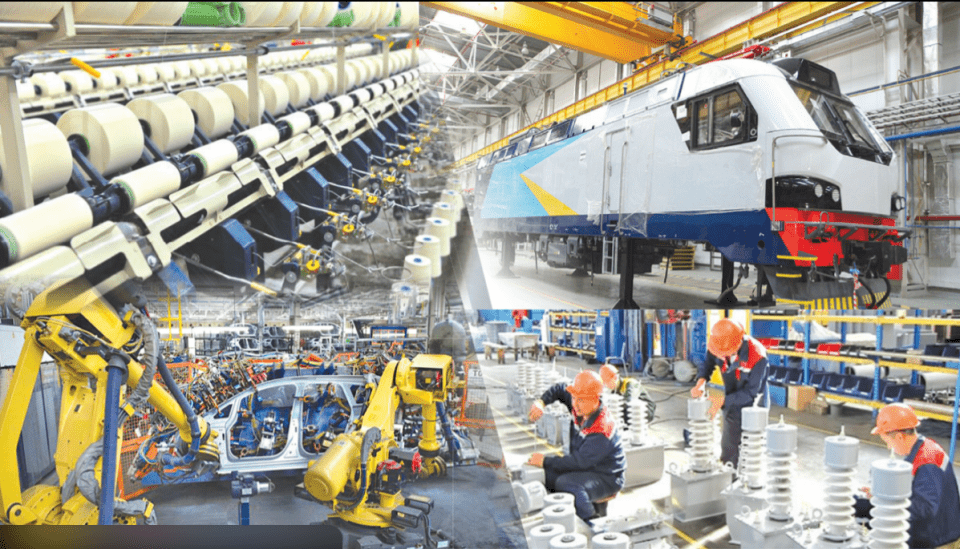
  • Over recent years, Kazakhstan has undergone a significant transformation in the eyes of international business. Whereas the country was once perceived primarily as a supplier of raw materials—oil, gas, uranium, and metals—it is now increasingly viewed as a full-fledged industrial and manufacturing platform. At Stron Engineering (Stron Holding), we observe this process from the inside and can confidently state that this is not a short-term surge of interest, but a long-term structural trend that is opening new opportunities for both foreign investors and Kazakhstan engineering companies.

    Global Context: The World Is Shortening Supply Chains

    The pandemic, geopolitical conflicts, sanctions, and trade wars have radically changed how large corporations approach production placement. The concept of “long and cheap” supply chains is giving way to the principles of resilience and controllability. Companies are increasingly choosing regions where it is possible to:

    • reduce logistical distances;
    • minimize sanction and political risks;
    • ensure stable energy supply;
    • forecast development 10–20 years ahead.

    In this context, Kazakhstan has found itself in a unique position.

    Geography and Logistics: A Key Point in Eurasia

    Kazakhstan is located at the intersection of strategic routes connecting China, Europe, Turkey, the Middle East, and Central Asian countries. The development of the Middle Corridor, transport hubs, and industrial zones makes the country a convenient base for establishing production facilities targeting multiple markets simultaneously.

    For European companies, this provides an opportunity to diversify logistics and reduce dependence on unstable routes. For Asian manufacturers, it allows production to be closer to end consumers in Europe. For international holdings, it enables the creation of regional production centers with a flexible export model.

    Energy: A Competitive Advantage for Industry

    One of the key factors we observe in practice as an engineering company is the availability and relative stability of energy resources. Against the backdrop of the energy crisis in Europe and rising production costs in many developed countries, Kazakhstan remains attractive in terms of energy supply.

    For industries where energy is a critical component of production costs—such as metallurgy, machinery, chemicals, processing, and building materials manufacturing—this becomes a decisive factor when choosing a location.

    Workforce and Engineering Base

    Kazakhstan has a strong engineering and technical school, developed during the Soviet era and adapted to modern conditions. At the same time, the cost of skilled personnel remains competitive by international standards.

    For foreign companies, this is a rare combination:

    • access to engineers, designers, and technical specialists;
    • ability to implement modern standards and technologies;
    • process control without compromising quality.

    For Stron Engineering, this means the ability to act as a bridge between global technologies and local expertise.

    Институциональная среда и защита инвестиций

    “Astana” (Astana International Financial Centre, AIFC) offers foreign investors a legal environment with elements of English law, independent courts, and transparent mechanisms for capital protection.

    Combined with industrial zones, tax incentives, and government support for projects at the launch stage, Kazakhstan creates a clear and predictable investment environment—something that is currently lacking in many regions of the world.

    What This Means for Stron Engineering (Stron Holding

    For our company, the current processes represent a qualitatively new stage of development:

    • participation in projects with international clients and European partners;
    • integration of modern engineering, digital, and manufacturing technologies;
    • work on new types of facilities—plants, industrial parks, logistics and processing complexes;
    • development of expertise in projects focused on export and international standards;
    • building sustainable partnerships with foreign equipment and solution providers.

    We see Kazakhstan not merely as a territory for construction, but as a platform for the transfer of technologies, knowledge, and management practices.

    Keeping Pace with the Times and Global Trends

    Relocating production to Kazakhstan is not a temporary trend or a reaction to a single crisis. It is part of a global rethinking of the world’s industrial map. Countries that can offer stability, energy, skilled personnel, and clear rules of the game are becoming magnets for capital.

    For Stron Engineering (Stron Holding), this represents an opportunity to:

    • grow alongside the market;
    • participate in shaping the country’s new industrial ecosystem;
    • operate at the intersection of local and global business;
    • strengthen Kazakhstan’s position as a modern engineering and manufacturing hub in Eurasia.

    We are confident that it is precisely such projects and partnerships that will shape the industry’s development for the coming decades — and we are ready to be an active part of this process.

Back